As we interrogate the history of U.S. Television, and how and why it evolved, along with how TV has been entwined with cultural formations, I ask that students be conscious of how authors use evidence to construct histories, and how through our investigations we participate in negotiating these histories. As we move through the ages considering the dynamics shaping this polysemic media, and you conduct your own research, some central questions to ask are why are we seeing the TV we see? And as move towards the present day, what has transformed or replaced TV?
The course is organized around the following modules:
-
Birth of TV
-
Formative Regulations and Technology
-
What’s On? [Programming, Format & Flow]
-
Golden Age
-
Television Explosion
-
News
-
Here comes the Internet
-
Labor in the age of Emergent Tech
-
Platforms, Influencers, Interactivity and Participatory Culture
Previous Planned Field Trips:
-
Junction Arts & Media (JAM) studio tour with Jordyn Fitch, Dartmouth ‘20, JAM Community Engagement Producer and Samantha Greene, JAM Director
-
TV Live Switching Workshop TV Studio, Visual Arts Center with Brandon Doherty, Film & Media Technical Director
-
Dartmouth Data Experiences & Visualizations Studio (DEV Studio) with Claire Preston and John Bell
Previous Planned Guests:
-
‘Nicest Kids in Town: American Bandstand, Rock ‘n Roll and the Struggle for Civil Rights in 1950s Philadelphia’’ with Matthew Delmont, Dartmouth Associate Dean and Fairchild Distinguished Professor of History
-
‘Content Shifts: Prestige TV & Streaming’ with Michael Ellenberg, CEO MediaRes, Dartmouth ‘97
-
‘The Age of Narrowcasting’ with John Bell, Director Dartmouth Resources for Emerging Arts and Media (DREAM), Dartmouth Lecturer in Film & Media Lecturer
Learning Goals
This course has four specific aims:
-
To help students contextualize current TV practices considering distinct technologies, industrial formations, and spatial practices that constitute the televisual in different historical and geographic contexts, and throughout different regulatory frameworks.
-
To help students identify a range of approaches for critically engaging television, and key organizing concepts such as local vs national, liveness, flow, distraction, programming, audiences, conceptions of domesticity, and national identity..
-
To prepare students for further studies in media criticism and savvier consumption/production of television.
-
To excite students to develop their own research questions around television production, distribution and transmission, the power of networks, the impact of regulatory frameworks, corporate imperatives, and the impact on culture.
Objectives
In this course each student will:
-
Watch some TV!
-
Report on significant changes in the regulatory framework, or norms around production, distribution or transmission of media.
-
Identify critical technological advancements that transformed the television and communications industry.
-
Stage some scenes within a live-switching TV studio with a three camera set-up.
-
Relate key significant cultural shifts to the televisual landscape, with an understanding of how television impacts our cultural understandings.
-
Debate what the current regulatory framework should be for the production, distribution, and transmission of current day televisual content.
-
Conduct three short research projects comparing and contrasting televisual production in the past with televisual production of today using frameworks explored in class.
-
Produce televisual presentations of your research.


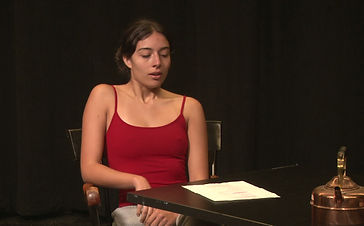
TV 3-Camera Switching Workshop: scenes from "The Honeymooners," "I Love Lucy," and "Mary Tyler Moore" performed, directed and recorded live with live switching between three camera feeds by students during one 2 hour class period.